Hidden Moisture in the Home: The Costly Problem You Can't Ignore
Hidden moisture in your home is like a silent troublemaker, quietly lowering property value, affecting your health, and messing with the structure of your house. Most homeowners only discover it when stains pop up on ceilings, floors start to buckle, or someone at home gets mysterious respiratory issues. Let’s dive into why hidden moisture is so dangerous, how modern detection helps you stay ahead, and practical steps to prevent and fix moisture before it becomes a pricey headache.
We'll look at detection tools, inspection advice, prevention tips, and real-life examples from research and case studies. You’ll also get checklists, troubleshooting advice, and pointers for when to call a pro. If you think you might have a moisture problem, inspecting spots like the basement early can help. Consider a basement inspection to kick things off.
This post backs up advice with credible sources on moisture and mold impacts, inspection techniques, and case studies showing how costly moisture problems can get. Knowing the signs and using modern tools can save you a lot and keep your home healthy.
Why Hidden Moisture is a Big Deal
What It Is and Where It Comes From
Hidden moisture is water building up in places you can't see, like inside walls, under floors, above ceilings, in insulation, and foundation materials. It comes from various sources such as roof leaks, plumbing issues, poor ventilation, groundwater, and construction mistakes. Since it’s hidden, damage can build up over months or even years before you notice.
Common culprits include plumbing drips behind cabinets, blocked drainage in cladding systems, poorly sealed windows, and indoor humidity condensing on cold surfaces. Weather patterns, freeze-thaw cycles, and bad grading can make these issues worse, especially in places with changing temperatures.
Why It’s Often Overlooked
Hidden moisture often goes unnoticed because visual checks aren’t enough. Paint, drywall, and flooring can hide moisture temporarily. Homeowners and some maintenance folks might focus on visible issues and miss what’s going on inside. Regular cleaning and painting can also cover up signs while damage continues underneath.
Moisture problems can also be sporadic, tied to certain conditions like heavy rain, high humidity, or HVAC cycles. If an inspection happens during dry weather or when the HVAC is working well, moisture signs can be absent but reappear under the right conditions.
What Happens If You Ignore It
Ignoring hidden moisture leads to problems like mold, wood rot, metal corrosion, material breakdown, insulation failure, and eventually, building component failures. These issues often mean costly repairs, lower home value, and health risks. In severe cases, moisture damage might require replacing entire assemblies, like sheathing, framing, or flooring.
Since damage builds up over time, repair costs can skyrocket quickly. Catching it early and acting fast is key to keeping repair costs down.
Detection Tools: Finding the Invisible
Thermal Imaging Cameras
Thermal imaging uses infrared sensors to spot temperature differences that can point to moisture. Wet areas often show different thermal patterns than dry ones, appearing cooler or warmer on thermal scans. Infrared cameras help inspectors cover large areas quickly and focus on spots where something seems off.
Thermal imaging is non-invasive and great for initial surveys, but it only diagnoses problems when paired with other tools and knowledge. Experienced interpretation is key since readings can be influenced by various factors like surface properties and weather.
Moisture Meters and Pin Sensors
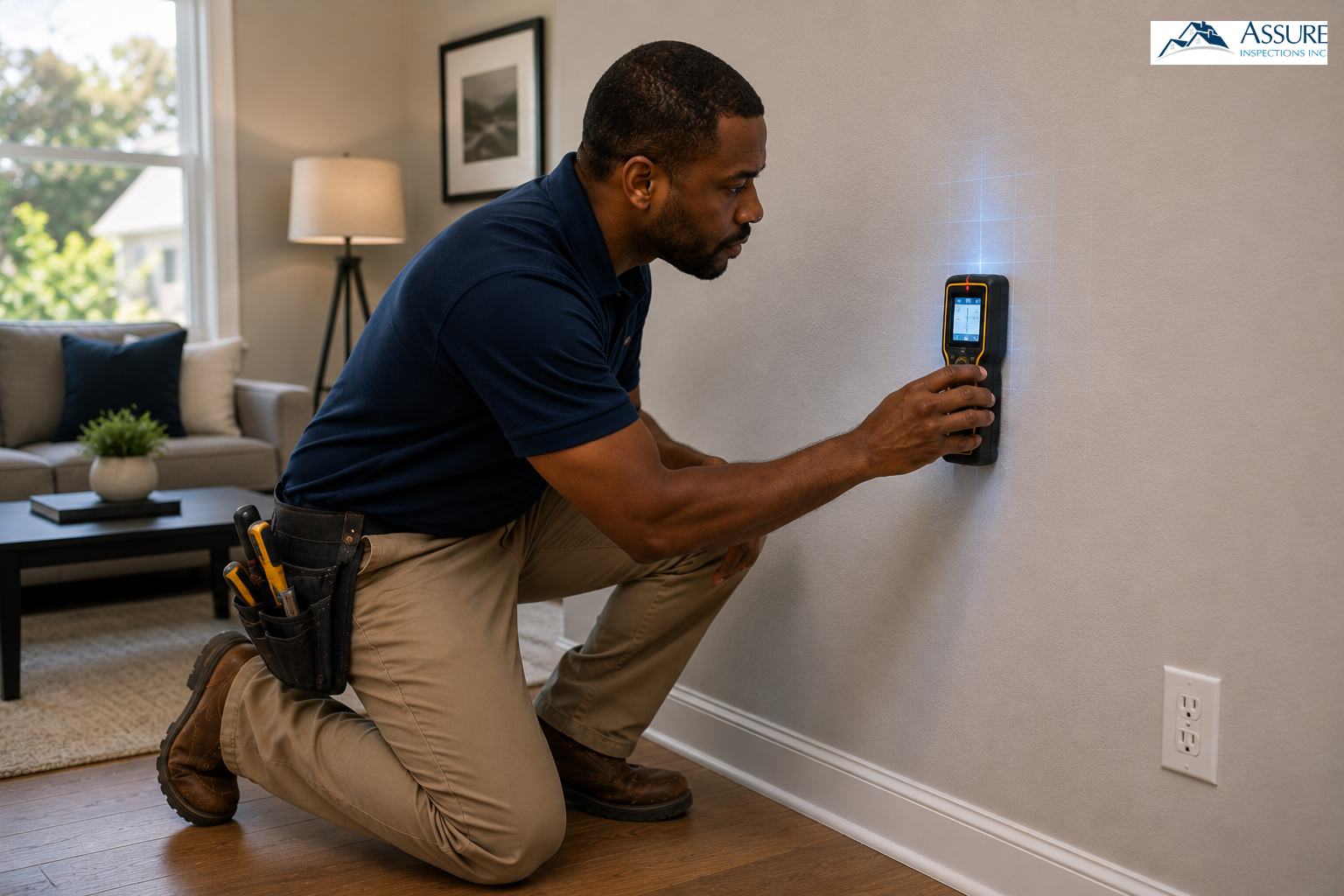
Moisture meters measure moisture content directly. Pin-type meters check electrical resistance between probes and are handy for specific spots, while pinless meters use electromagnetic signals without penetrating the surface. Calibrated meters help map out moisture levels and affected areas.
Combining thermal imaging with moisture meters confirms if thermal anomalies match high moisture levels. Regular monitoring with meters helps track a problem’s progression or remediation over time.
Hygrometers and Humidity Monitoring
Hygrometers measure relative humidity and, with data loggers, provide continuous indoor moisture records. Monitoring humidity helps find places prone to condensation and mold — typically areas over 60% RH for long periods. For good moisture control, aim for indoor RH between 30% and 50%.
Using data loggers during risky seasons or after fixes verifies if interventions work and if moisture conditions stay in check. Homeowners can use affordable data loggers or smart thermostats with humidity sensors to get insights between inspections.
Common Signs of Hidden Moisture
Musty Smells
A constant musty smell is a reliable early sign of hidden moisture and mold growth. These odors come from compounds released by mold and bacteria on damp materials. Since smells can travel through cavities and vents, the source might be far from where you notice the scent.
Don't ignore musty smells. Instead, inspect the area rather than masking the odor with air fresheners. Air sampling and focused inspections can find sources not visible on finished surfaces.
Condensation and Foggy Windows
Condensation on windows, especially recurring fogging or persistent condensation during cold months, can point to high indoor humidity or poor thermal performance. While single events may be weather-related, persistent condensation signals a moisture imbalance and potential wall or window damage.
Simple steps like improving ventilation and adding insulation can help, but sometimes a bigger fix, like window replacement or attic ventilation, is needed for recurring issues.
Warped Floors and Discolored Walls
Floor warping, bulging drywall, blistering paint, and discolored plaster are common signs of moisture infiltration. These signs show significant moisture buildup that deforms materials and should prompt investigation. Often, the visible surface is just the tip of the iceberg; underlying framing or insulation might be affected.
Because repairs can require removing finishes to assess structural integrity fully, early detection and minimal diagnostics can limit repair costs.
Health and Structural Risks: More Than Just Cosmetic
Health Impacts: Mold and Respiratory Issues
Extra moisture fosters mold growth, linking to health problems like allergies, asthma, and other respiratory issues. The National Center for Healthy Housing shows how moisture hazards are tied to increased respiratory illness, especially in vulnerable groups like kids and the elderly. Tackling moisture early cuts mold risk and health burdens on occupants.
For practical guidance on mold and indoor air quality, check out the U.S. Environmental Protection Agency for moisture control and mold cleanup tips.
Structural Breakdown
Water weakens many building materials. Wood can rot, metal can corrode, and masonry can crack. These processes start within assemblies but can lead to visible defects like sagging floors or failing roofs.
Long-term moisture exposure speeds up material aging, cutting short the expected service life and leading to earlier replacements and higher costs.
The Financial Hit
Repair costs vary based on severity and affected areas. Surface repairs like drywall replacement are cheaper than deep remediation involving structural framing or insulation. Demolition extent, need for specialized contractors, and moisture exposure duration all influence cost. Research shows catching issues early is the best way to control costs.
For instance, large-scale failures like building envelope problems show how design flaws can boost repair costs, highlighting early detection's value.
Prevention Strategies: Keeping Moisture at Bay
Outside Controls: Roofs, Gutters, and Grading
Preventing moisture starts outside. Keep your roof in good shape, maintain flashing and sealants, and ensure gutters direct water away from the foundation. Bad grading that slopes toward the house often causes foundation moisture issues and should be fixed to divert water away.
If you’re unsure about drainage issues, a professional grading & drainage inspection can point out problems and recommend fixes.
Inside Controls: Plumbing and Appliances
Regular maintenance of plumbing fixtures, water heaters, washers, and dishwashers cuts interior leak risk. Check supply lines, condensation pans, and seals; replace old parts to prevent sudden failures. Appliances on finished floors should have secondary containment to limit damage from leaks.
If you suspect plumbing-related moisture, consider a plumbing system inspection for potential failure points and mitigation advice.
Humidity and Ventilation Tips
Keep indoor relative humidity between 30% and 50% to minimize condensation and discourage mold. Use bathroom and kitchen exhaust fans, run dehumidifiers in basements, and ensure HVAC systems manage moisture loads. In colder climates, focus on attic and crawlspace ventilation to prevent condensation.
Homes with repeated humidity issues might need a full assessment, including insulation, ventilation, and HVAC balance, for lasting solutions.
DIY Checks and When to Call a Pro
Quick Moisture Check
Start by walking through known risk areas: basement, attic, around plumbing, and near exterior openings. Sniff for musty odors, look for water stains, check windows and pipes for condensation, and press gently along baseboards for soft spots. Use a simple moisture meter or phone hygrometer app for basic readings.
If you find signs, document them with photos and dates, then schedule a pro inspection to confirm and plan remediation. Early documentation helps track issues and aids insurance or contractor talks.
Short-Term Fixes
Run a dehumidifier in damp areas, cover small roof leaks with tarps, extend downspouts temporarily, and shut off water to leaking fixtures until repairs. These quick fixes limit damage until professionals handle permanent repairs.
Remember, short-term fixes aren’t substitutes for comprehensive repairs when structural or persistent moisture sources exist; they’re meant to limit damage until pros complete remediation.
When to Call a Pro
Call a professional if you notice persistent odors, high moisture readings, visible mold, structural issues, or recurring leaks. Certified inspectors can identify moisture sources, assess damage extent, and recommend remediation steps. For mold or large-scale water intrusion, hire remediation specialists and licensed contractors for safe repairs.
Professional help is crucial when health concerns are present, multiple assemblies are affected, or insurance documentation is needed for claims.
Conclusion and Next Steps
Hidden moisture can harm health, safety, and home value if ignored. The good news? Modern tools — thermal imaging, moisture meters, and humidity monitoring — along with informed inspections and maintenance, give homeowners the power to spot and fix moisture problems early. The key is to focus on vulnerable areas and act quickly when signs appear.
If you want to protect your investment and avoid costly repairs, start with a professional inspection of risk areas. For a focused check of vulnerable spaces, Assure Inspections Inc. offers specialized basement inspections and foundation & crawl space inspections that identify moisture issues before they escalate. For ventilation and insulation problems contributing to moisture, our attic, insulation, & ventilation inspection helps pinpoint solutions.
For immediate protection, follow a simple checklist: document odors and stains, run a dehumidifier in damp areas, clear gutters and extend downspouts, and address any plumbing leaks promptly. When in doubt, schedule a professional inspection to uncover hidden problems and get a prioritized remediation plan. Early action saves money and protects the health of your household.
Ready to schedule an inspection or have questions about a possible moisture concern? Contact Assure Inspections Inc. at (708) 692-7877 or email office@assurehomeinspector.com to arrange a thorough, data-driven inspection. Learn more about our services and book an inspection at our website: Assure Home Inspector.
For additional reading on health impacts and best practices related to moisture and mold, consult the National Center for Healthy Housing for data-driven context on moisture hazards (nchh.org - Moisture), the U.S. Environmental Protection Agency for practical guidance on mold and indoor air quality (epa.gov - Mold Resources), and a historical overview of large-scale moisture failures documented in the Leaky Condo Crisis (en.wikipedia.org - Leaky Condo Crisis).
Protect your home today: schedule a comprehensive inspection and stop hidden moisture from becoming a costly repair tomorrow.